
Every job is different, and different roles can face wildly varying cybersecurity risks. The nurse in a hospital, the developer working in tech, or the engineer in a metalworks are all exposed to attacks, but in very specific ways.
On top of that, each industry works under specific regulations, handles different data, and encounters a diverse range of cyber threats. Yet most security awareness programs hand all three the same generic phishing module and expect it to be a success.
Customized, industry-specific cybersecurity training isn't a nice-to-have; it's what separates training that actually changes behavior from one that only ticks compliance boxes and fails to keep your teams – and your business – safe.
So, what does good industry-specific cybersecurity training look like across a few key sectors, and how can you build and scale your own tailored training?
Let’s start by looking at the basics: why generic cybersecurity training fails so often.
Why standardized cybersecurity training fails people in specific industries
Too generic: Most off-the-shelf awareness training is built to be broadly applicable, which makes it forgettable. A phishing course modeled on a fake shipping notification might be the right choice for an office worker, but it’s unlikely to resonate with a nurse who is more likely to get a phone call impersonating a physician.
Not engaging: When people don't recognize a scenario as relevant to their actual job, they disengage. And once training feels abstract or disconnected from the real risks people face in their daily work, it’s much less likely to actually change behavior.
Too long: Many online courses for cybersecurity have videos that are far too long, with some pushing the 20-30 minute mark. This demands more time than people have, and the format can’t be personalized to suit the needs of every industry.
Lack of specialized resources: Security and compliance teams need sector-specific content covering regulatory frameworks and best practices, but building and maintaining this for every department is a resourcing nightmare. Instead, teams just fall back on generic content and hope for the best.
No match with regulations: Auditors expect training mapped to a specific framework and role. Whether it's HIPAA, PCI DSS, NIS2, GDPR, or other relevant regulations, "we ran some training" isn't a defensible answer anymore. Instead, the training needs to reflect the actual real-world obligations faced by different teams, and needs to help them stay compliant with these obligations. Unfortunately, most generic training can’t do that.
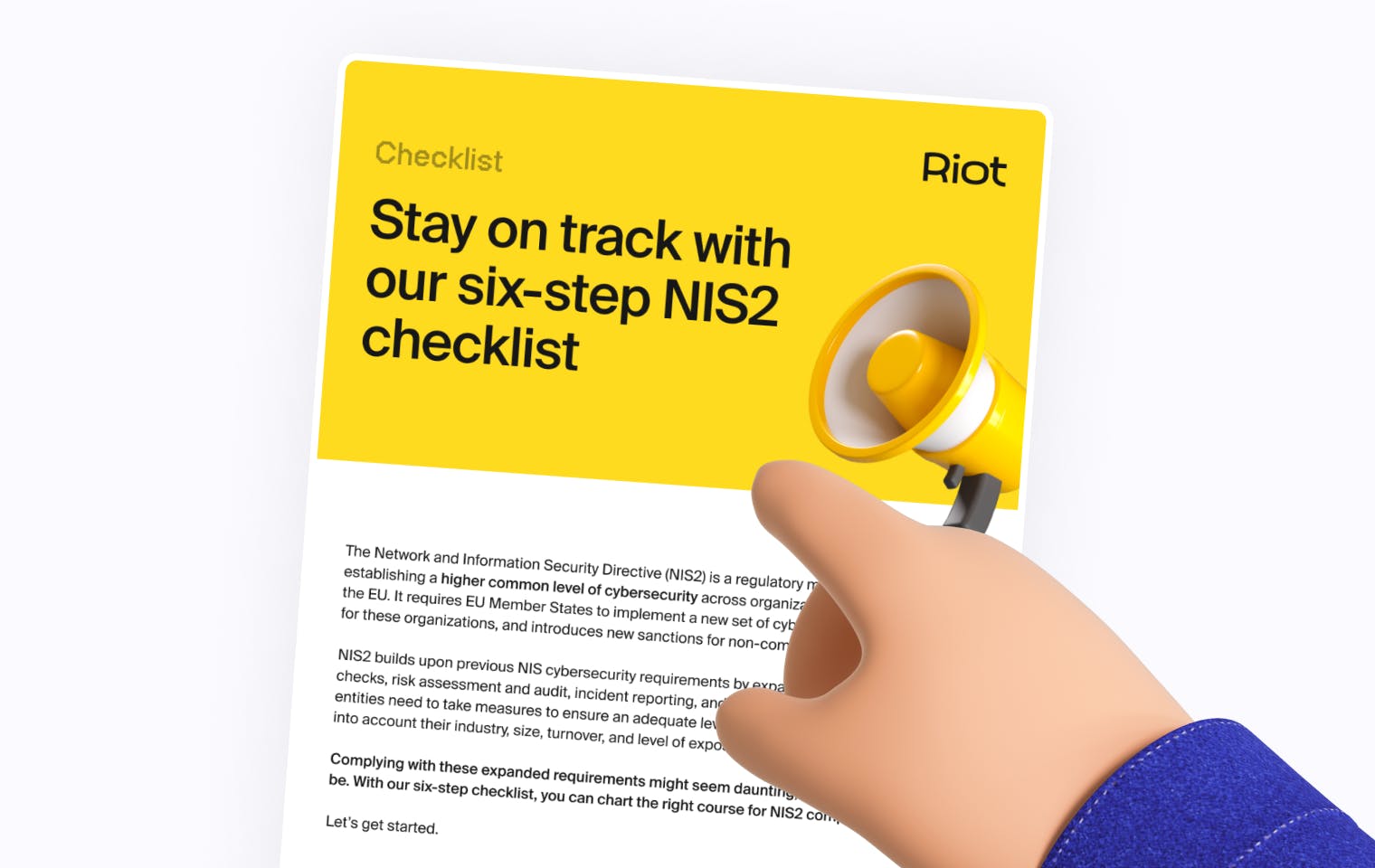
Need help with NIS2? Check out our free checklist
What great industry-specific cybersecurity training looks like in 4 sectors
So, we’ve covered why generic training often fails to engage teams. Now, let’s explore what great industry-specific cybersecurity actually training looks like in different sectors with different risk profiles and regulatory demands.
1. Companies managing cardholder data (PCI DSS)
- Training for companies managing payment systems needs to cover the scope of the cardholder data environment, realistic wire transfer and business email compromise (BEC) scenarios, and social engineering aimed at intercepting dual-approval processes.
- The regulatory context is important. Training must be consistent with Payment Card Industry Data Security Standards (PCI DSS) and provide sector guidance like FFIEC, plus state-level breach notification laws.
What generic training misses: Generic training tends to miss the mark by using BEC scenarios that don't reflect the approval workflows employees actually use, or by describing data breach risks in ways that don't map cleanly onto how credit card data systems actually work.
2. Manufacturing & critical infrastructure (OT security)
- Training needs to address IT/OT convergence risk, legacy SCADA systems, and, critically, the physical safety consequences of a cyber incident, not just data loss.
- In the manufacturing sector, third-party vendor access and remote access are often the primary attack vector, rather than phishing emails about payroll, HR, or delivery issues.
What generic training misses: Office-centric training often falls short, as scenarios built around inbox threats simply don't register with someone on a factory floor whose exposure runs through a legacy control system or a vendor's remote access credentials.
3. Software & tech teams (OWASP)
- Developers, engineers, and technical teams need to develop awareness of secure coding practices, and understand the most common threats and vulnerabilities, including open source and supply chain attacks. OWASP Top 10 concepts need to be translated into training a non-security engineer will actually finish.
- Shift-left security culture and CI/CD pipeline risk matter more here than end-user phishing awareness.
What generic training misses: Most training almost universally disregards this audience because it's built for end users clicking links, not for people who ship code and maintain web platforms and applications.
4. Healthcare (HIPAA)
- In the last decade, cyberattacks targeting the healthcare sector have continued to grow at a huge pace, with attackers targeting hospitals, insurers, and care providers.
- With that in mind, healthcare training needs to cover PHI handling under HIPAA, phishing lures targeting EHR systems, insider curiosity-driven access to patient records, breach notification obligations, and the risk of third-party breaches.
- Medical records carry outsized value on the dark web precisely because they're durable; unlike a stolen card number, a patient's medical history doesn't lose its value in a few months.
What generic training misses: Talking about "data protection" in the abstract doesn't help a primary care provider identify clinical workflows that are targeted most commonly. A shared workstation, a portal login left open, a curious glance at a colleague's chart: this is where PHI is actually exposed, and training needs to match this.
Adapting cybersecurity training content not just to industry, but expertise level too
Matching training to a sector is a big step forward, but it isn't enough on its own.
Take a hospital for example; clinicians, IT admins, and executive leadership all share the same HIPAA exposure, but they have very different threat surfaces and levels of technical literacy.
Good training accounts for this by segmenting according to industry, role, seniority, and technical depth. This requires assessing onboarding-level content for new hires, continuous refreshers for the broader team, and targeted remediation for anyone who's already failed a phishing simulation.
Timing matters too. A short, targeted lesson delivered immediately after a risky click is far more effective than an annual generic module delivered to all teams at once, regardless of their risk profile.
Why building customized training content can be so hard
Despite the many downsides of relying on generic cybersecurity training, it’s not surprising that so many companies still use it. After all, even security teams with dedicated budgets struggle to build customized training with the right level of specificity.
This is because:
- It takes time. Writing and maintaining a dozen parallel content tracks, by industry, role, and expertise level isn't something most teams have the bandwidth for.
- Regulatory frameworks change. Compliance requirements shift faster than most companies can keep up with; a new law or a framework revision can make a course outdated within months of publishing it.
- Huge content libraries don't solve anything. A big off-the-shelf content library (like KnowBe4 and other platforms) seems to solve the need for specialized training through sheer volume – but volume alone doesn’t always guarantee specificity.
How Riot's Studio unlocks tailored awareness training
Riot’s Studio empowers security, compliance, and HR teams to build custom courses that match their exact operational context rather than relying on a generic library.
Even better, it does it quickly: what used to take weeks to build now takes minutes. Riot also regularly updates its core course library to keep up with regulations and updates, including HIPAA, PCI DSS, GDPR, NIS2, OWASP, and others.
How it works
- Describe your industry, compliance driver, and your audience in plain language, and Studio generates a course draft that matches your needs. The approach is the same approach behind Albert, Riot's cybersecurity coach, that drives 91%+ completion rates.
- Alternatively, you can also just paste in a relevant cybersecurity news article, and Studio will turn it into a timely course on its own.
- You have total control over the process. Start from Riot's existing trusted content and adapt it to your context, or build from a blank canvas if you need something entirely new.
- Real-time collaboration means security, compliance, and HR can shape a course together. This is genuinely useful when something like a HIPAA course needs sign-off from both security and legal teams.
- When the course is ready, publishing is frictionless: it deploys directly into the chat tools your employees already use, including Teams, Slack, and Google Chat, with minimal integration lift required.
The result: Training that's fast and easy to build, but still matches the actual situations your people face every day: their regulatory environment, their role, and their expertise level. With Studio, IT and security leaders don’t wade through a huge library of generic training looking for something that might match their needs.
Learn more: Your Boring Cybersecurity Training is Only Helping Scammers – Here Are 4 Ways We Can Do Better
Customized cybersecurity training is an ongoing process
Remember, building the first version of an industry-specific course is only the first step of real behavioral change. Once you’ve shipped your training, it’s time to iterate.
Learners will have opinions about what works and what doesn't. Taking that feedback seriously and responding to it within your content is what keeps training relevant rather than letting it calcify into another outdated annual checkbox exercise.
Regulatory frameworks shift, new threats emerge, and your workforce changes. Keeping training content fresh and relevant is an ongoing process, so never stop taking feedback from learners and collaborating together. With Studio, we make this easy.
Effective cybersecurity training is specific and memorable
To drive meaningful changes in behavior, cybersecurity training has to reflect both the industry someone works in and the role they play within it. Generic content and one-size-fits-all simulations no longer cut it, because employees can tell when training wasn't built to match their needs.
The good news is that customized content doesn't have to soak up all of your team's time, energy, or budget. With the right tools, it's possible to build training that's specific to your industry, roles, and risk profile.
To see how easy it is to create customized training your teams will love with Studio, and to experience our industry-specific awareness modules, talk to an expert.
FAQ
- What is industry-specific cybersecurity training? It's security awareness training built around specific regulatory requirements, attack surfaces, and daily workflows of a particular sector. For example, HIPAA-focused training for healthcare or OT-focused training for manufacturing rather than generic content applied across every industry.
- Which industries require specialized cybersecurity training? Every industry benefits from specialized training, but the need is greatest anywhere sensitive data or critical systems are on the line — healthcare (HIPAA, patient data), finance and payments (PCI DSS, cardholder data), manufacturing and critical infrastructure (OT security, physical safety), and software or tech teams (secure coding, supply chain risk). The specific risks and regulations vary by sector, which is exactly why generic training falls short.
- Why does customized training make such a big difference? Employees engage more with scenarios they recognize from their actual job, and auditors increasingly expect training mapped to specific regulatory frameworks, roles, and needs. Generic training tends to be forgettable and often doesn't hold up to external scrutiny.
- Do I need a huge budget to provide customized training? No. Tools like Riot's Studio are designed to empower teams to build customized courses from a plain-language brief or news article in minutes, without a dedicated content team or a large budget.
- What is Riot Studio? Studio is Riot's course-building tool, letting security, compliance, and HR teams create custom cybersecurity training that matches their exact industry, compliance requirements, and audience.
- How does Riot Studio work? You describe your industry, compliance driver, and audience, or paste in a relevant article, and Studio generates a course draft matching Riot's tone and structure. Teams can adapt it, collaborate in real time, and publish directly into the tools employees already use.