
For years, the standard advice for spotting a phishing email scam has been straightforward: check for spelling mistakes, double-check the sender's domain, and be wary of generic greetings. This advice has largely worked with mass phishing campaigns, but spear phishing has always been a different, more complex beast.
In 2026, AI has totally changed the game. In the past, the downside of spear phishing for hackers was that it was time-consuming and expensive. Now, the cost and effort required are no longer a barrier, and traditional strategies to fight scammers simply aren't enough to protect us from an attack.
But there’s still hope. The most effective countermeasure isn't a smarter filter or signing people up for yet another training module. It's reducing the personal data attackers can get their hands on in the first place, combined with building sharper human awareness.
What exactly is spear phishing?
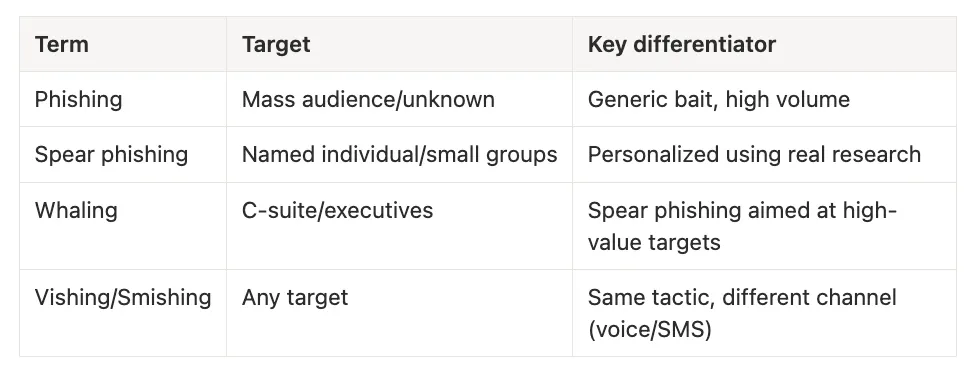
Spear phishing – not to be confused with the sport of spearfishing – is a targeted phishing attack aimed at a specific person or organization. What makes it one of the most malicious and effective forms of cyber attacks is that it doesn’t just lure anyone in with a generic hook; it's built using real, researched details about the person, including their name, job title, credentials, colleagues, and recent online activity.
Why is today's spear phishing so different? AI has removed the constraints
Before AI, attackers had to do all the hard work themselves: researching the target, mimicking their writing style, figuring out who they trusted, and crafting a message that would actually land convincingly into an inbox.
It was a lot of work. But all that work was what kept spear phishing less common than other forms of phishing. Now, AI has completely changed all of this.
More targeted — AI does the reconnaissance
LLMs and scraping tools can now compile a target's employer, role, colleagues, writing style, recent posts, and even life events from public sources (LinkedIn, company bios, social media, and data broker sites) in minutes rather than hours.
That reconnaissance step, historically the bottleneck that limited spear phishing to high-value targets, is now largely automated. Today, mid-level employees and everyday individuals are viable targets too, and not just C-suite executives. And because the research needed to stage a spear phishing attack is cheaper, smaller companies and organizations that never thought of themselves as targets are now in scope as well.
Easier — attack generation and delivery in a single click
AI-written messages eliminate nearly all the traditional telltale signs of an attack: bad grammar, weird phrasing, and generic greetings. Spotting these used to be the top training advice for spotting a phishing attempt.
With AI, attackers can generate dozens of tailored variants per target for close to zero marginal cost, and increasingly pair the email with an AI-cloned voice note or a deepfake video snippet for a follow-up "confirmation" call. That kind of multi-channel corroboration was expensive and technically difficult to produce a year or two ago. Now it's cheap and fast, and scammers are getting in on the action.
The technical and creative skill barrier to running a convincing, personalized campaign has essentially disappeared. And while mainstream AI tools do have guardrails meant to stop them from being used for scams, attackers routinely find ways around them.
More dangerous — traditional defenses were built for a different threat
Spam filters are designed to catch high-volume and easily recognizable bad patterns. Spear phishing is low-volume and novel by design, so it slides past them.
"Look for the red flags" training was built around the assumption that attackers would make human mistakes. When the grammar is perfect and the details are accurate, that assumption must end. It's no coincidence that click-through and success rates on AI-personalized attacks are measurably higher than on generic phishing, with one study showing that spear phishing emails crafted with AI can trick over half of all targets.
How current spear phishing attacks unfold
When you're looking for signs of a current-day spear phishing attack, here's what a typical attack chain looks like today:
- Target identification: The attacker identifies a target through a public profile, company website, or social media presence.
- Profile building: An AI tool compiles a profile including role, manager's name, recent projects, and writing tone. They have the facts on your company down. That’s why you should treat an excessively precise email or message as a warning sign.
- Message drafting: AI drafts a message referencing something real and specific: a recent company announcement, a colleague's name, a pretext tied directly to the target's actual job.
- Delivery: The message arrives through the channel the target trusts most, whether that's email, Slack or Teams, sometimes followed by a text or voice message for reinforcement.
- Action: the target clicks, replies, shares credentials, or transfers funds because the message passes every traditional "does this look legit" check.
This isn't hypothetical. The Arup $25.6M deepfake video conference scam is one of the most famous examples of a complex AI multi-channel spear phishing attack, beginning with an email impersonating the CEO and escalating to a deepfake video conference call.
So, with all that in mind, what should we do to stay secure?
What’s the best defense? Proactively limiting what attackers can find out
Awareness training and phishing simulations teach people to recognize an attack once it lands in their inbox, and that's still essential.
But there's a second, earlier layer of defense that gets far less attention: proactively reducing your digital footprint so there's less raw material for attackers to build a convincing pretext from in the first place. Fewer usable details mean attackers are pushed back toward blunt, generic phishing hooks, the kind people are actually trained to spot.
Here are three ways to put this into practice:
Step 1: Do a personal and organizational OSINT audit
Think of this as role-playing the scammer: Do an online search of yourself, your business, and key employees, just like an attacker would.
Identify what a stranger could learn about you in ten minutes: your manager's name, your recent projects, your travel plans, your vendor relationships, even family details. What's visible on LinkedIn? On the company's "About" page? What’s posted on social media, data broker sites, or in old breach dumps? Leave no stone unturned.
Step 2: Train people to trim their exposed surface
Now that you’ve got a picture of what’s out there, it’s time to take charge by encouraging people to:
- Edit down public-facing details on LinkedIn and company bios. This includes job specifics, org charts, and direct reports. Basically, remove anything that isn't business-critical.
- Opt out of data broker sites that resell personal information; there is a growing category of tools and services worth investigating to help you do this.
- Tighten social media privacy settings and be deliberate about what gets posted publicly, especially real-time location, travel, and workplace details.
- For organizations, it is important to limit what's published about internal reporting structures, vendor names, and finance workflows in press releases, job postings, and public org charts. These are exactly the details attackers mine for pretexts.
- A DLP tool like Sonar can help teams understand and limit exactly what sensitive information is being shared and where, giving you a practical handle on your organization's exposure.
Step 3: Pair footprint reduction with actionable, ongoing awareness training
Verify unusual requests for payments, credential resets, and urgent requests through a secondary channel. Treat suspiciously overly familiar personalization as a red flag, not a sign of legitimacy. And encourage people to report suspicious messages quickly rather than just deleting them so the wider team can be warned.
Awareness catches what gets through. Footprint reduction shrinks what can be built in the first place. In 2026, neither one alone is enough. You need both. A structured phishing simulation program combined with real footprint reduction work is what actually moves the needle.
Speaking of moving the needle, why not check out our free phishing simulation checklist?

Why does this work against AI-driven attacks?
With reports showing how powerful AI tools can be at crafting spear phishing attacks, it's tempting to think AI-driven attacks are essentially unstoppable. But it's worth remembering what AI actually does: it makes using existing public data cheap and fast. It doesn't create new data. If the information simply isn't public, AI has nothing to work with, no matter how sophisticated the model.
That's the leverage point that's still firmly in your control. This is where employee security posture management (ESPM) tools earn their place: they proactively help limit what your people share and give you visibility into your organization's collective digital footprint, rather than just reacting to attacks after they land.
The right awareness platform can catch spear phishing attacks
The spear phishing defenses that worked for years all rested on one assumption: that attackers had to work hard to personalize an attack. That expectation is gone. AI has made research, drafting, and multi-channel delivery fast and practically effortless.
What's still in your control is what attackers have to work with in the first place, and how sharp your team stays when something feels slightly too well-informed to be true. Reducing your visible footprint and staying alert are no longer optional extras. They're the two strategies that actually work and need to be exercised.
To find out how Riot can help you protect your teams from spear phishing attacks in 2026 and beyond, get in touch with one of our experts today.
FAQ
- What is spear phishing? Spear phishing is a targeted form of phishing that uses researched, personal details about a specific individual or organization to make a scam message look credible, rather than relying on a generic mass-mailed hook.
- How is spear phishing different from regular phishing? Regular phishing casts a wide net of generic messages sent to as many people as possible. Spear phishing targets a specific person or small group, using real information about them to make the message far more convincing.
- Can AI really make spear phishing harder to detect? Yes. AI removes the classic tells: poor grammar, awkward phrasing, generic details. It can generate highly personalized messages, send cloned voice notes, and even create deepfake videos at very low cost, making attacks harder to distinguish from legitimate communication.
- What's the single most effective way to reduce my risk of spear phishing? Reducing your digital footprint. The less accurate, specific personal and organizational detail that's publicly available, the less material attackers and the AI tools they use have to build a convincing pretext from.
- What should I do if I think I've received a spear phishing email? If in doubt, don't click any links or reply. Verify the request through a separate, known channel (like calling the person directly), and report the message to your security or IT team right away.
- What if I think I've already been scammed by spear phishing? Report it to your IT or security team immediately, change any credentials that may have been exposed, and if money or sensitive data was involved, contact your bank and relevant authorities as soon as possible. Acting quickly limits the damage.